

Some people go to Alaska and catch a 100 plus pound halibut on their first trip out. Some people go to Alaska and don’t know a rod from a reel and catch a 100 pound plus halibut. Some people who think they know how to fish and have over 40 days on the water in Alaska have NEVER caught a 100 pound plus halibut. That last person would be me. Or used to be me. My previous best was about 90 pounds which is a nice fish. And I have caught more 40 to 60- pound halibut than I can count. Still that elusive 100 -pound fish had alluded me.
My last visit with Big Blue Charters this past June produced my first 100 plus pound halibut. It was 67 inches long and the guide book says it should be 145 pounds. I was told that it was anywhere between 130 and 160. I am going with 145. That works for me.
 Big Blue Charters have caught numerous halibut well over 300 pounds over the years and my halibut made Captain Mike Keating shrug his shoulders like no big deal but that fish was one for the books for me. It was caught on an Avet reel and a Whopper Stopper built rod. One of the benefits of fishing with Big Blue Charters is that you know you will be using quality equipment and you don’t have to lug your own stuff on the plane. That way hopefully your luggage going home will be boxes of flash frozen filets from the tasty fish that inhabit the waters of Sitka.
 Another advantage of fishing with Big Blue Charters are their very comfy BAMF boats that have an inside cabin that seat 7 or 8 on the way to the fishing grounds. Also, this year they upgraded their sonar with some of the most up to date products available from Simrad. Mike Keating was like a kid in a candy store playing with it and marking spots. He was really excited about mastering it this summer and knowing to the “T” where all his good fishing spots are.
One of the great misconceptions I have found over the years about catching big halibut from people that have never caught a big halibut is that they don’t fight. That it is comparable to bringing up a door or cement filled boot. Nothing could be further from the truth. The one I caught peeled line as soon as he was hooked. Then about ½ way up he decided he did not want to come up quite yet so made a beeline to the bottom where our battle had started. So after 5 minutes of bringing him up and about a one- minute run back down I started all over again. He made one more short run all the while shaking his head violently trying to shake free. After 20 minutes or so I was able to get him to the surface where Captains Keating and Graham then did the dirty work and subdued him.
While that was a great fight, I think I even had a better one. This was one of the most unique catches that I had ever encountered. When I caught my first halibut it was with a big circle hook and about a fistful of bait. That rig was made for halibut. A little bit later I dropped down a herring using a salmon rod. The herring was rigged with two hooks. One hook through the nose/mouth area and one through the dorsal fin. I was fishing the bottom hoping for a lingcod or yelloweye when I hooked a fish. Right at that time Ed Robison had a big halibut on and he was tangled with Raymond McCullough. I tried getting out of the way by going on the other side of the boat and to get my rod around the motor I put the reel in free spool with my thumb on it. As I got to the other side of the boat and put the drag back on my fish felt much heavier. In fact, I claimed that this one was bigger than the 145 pounder. I was struggling with this one, especially on the salmon rod. It was bent in half and my line was being taken again and the rod was bent in half. After about 25 minutes I got color and Mike said sarcastically “All that work for that thing?” It was about a 70- pound halibut. The funny thing is the 70- pound fish was covering the 45 -pound halibut that was on the other hook. Our guess is while I put it in free spool and walked around the boat, one of the halibut bit the other hook. So, two nice halibut on one 6” herring with two hooks in it. Captain Graham said he has never seen that before and neither had I.
 Even if I had not caught the personal best halibut that day it still would have been one of my best fishing days ever. Part of fishing is having fun and fishing with Captains Jesse Graham and Mike Keating of Big Blue Charters, Ed Robison of Whopper Stoppers, Raymond McCullough and Vinny Peters an ex-deckhand for Big Blue Charters is fun. The days we were fishing were non- charter days so we just had a bunch of guys having fun. In fact, the only person who could have made it more fun was Big Blue Charters deckhand Emmitt Andersen. This outstanding young man had to miss the fishing though as he is part of the Sitka High School baseball team playing in the state finals that week that made a Hoosiers (reference 1980’s film about Indiana basketball) like run in winning the Alaska state baseball championship over a much larger and highly touted Anchorage high school. Congrats Emmitt.
 Ed of Whopper Stoppers builds some of the finest rods available and his booth is always jam-packed at the Fred Hall show. Ed is a good guy and a good guy to fish with. Since this was a trip of friends there was lots of ribbing going on. LOTS. Any mistake was magnified. Ed took it all in like it was no big deal.
Raymond is a trip. I would like to thank him for taking the target off my back. It is usually me who takes the brunt of the ribbing on this Alaska trip but Raymond changed that dynamic. It would be hard to find a more energetic, fun and quirky guy. He farmed a few salmon the first day and took quite a bit of ribbing but just smiled through it all. Who ever had just caught a fish, Raymond would go out his way to high 5 them. The next day before we went out fishing Mike and I stopped at a grocery store and bought some strawberries and gave them to Raymond and asked if he grew them on his farm. He just laughed. Raymond ended up with the last laugh though as he pulled in the largest salmon of the trip that day.
 The three days of fishing produced numerous halibut in the 30 to 70 range, some large lingcod that we had to release and some we kept that fit the slot limit and limits of yelloweye and black bass each day. And while the salmon fishing was a little slower than normal (plus we farmed a few) we spent more time targeting bottom fish than normal. Captain Keating is one of the best and most determined captains I know and as always put us on the fish. Fishing with Big Blue Charters is always a highlight for me and I am already looking forward to next year. Hopefully when I go no one will give me a basket of strawberries.
For more information about Big Blue Charters or to find out what dates are available for next year contact them at 907-747-5161 or check out their website at www.bigbluecharters.com.

 Carolina rigging consists of a sliding egg sinker, bead, swivel, 18”-36” fluorocarbon leader and a hook. In small surf a ½ ounce egg sinker works well. In bigger surf or when fishing in the wind use a ½ – 1-ounce or sinker to keep your bait on the bottom.
 With all the species that we have in California, the options are phenomenal. Not only is there an array of different fish to target, there are so many ways to target each fish. One of the staples in our West Coast fishing world, from south of the border all the way up to Oregon is bottom fishing. From rockfish to ling cod, to everything in between, it’s a great way to get beginners and kids hooked on fishing, and it is still quite enjoyable for the avid fisherman.
 The majority of the bottom fishing that I’ve personally done, has been in San Diego and south of the border. However, this last year or so, I’ve put in a good amount of time in Northern California, primarily off coast of San Francisco. Regardless of where you are on the coast, there are many crossovers in the techniques of targeting these bottom dwellers.
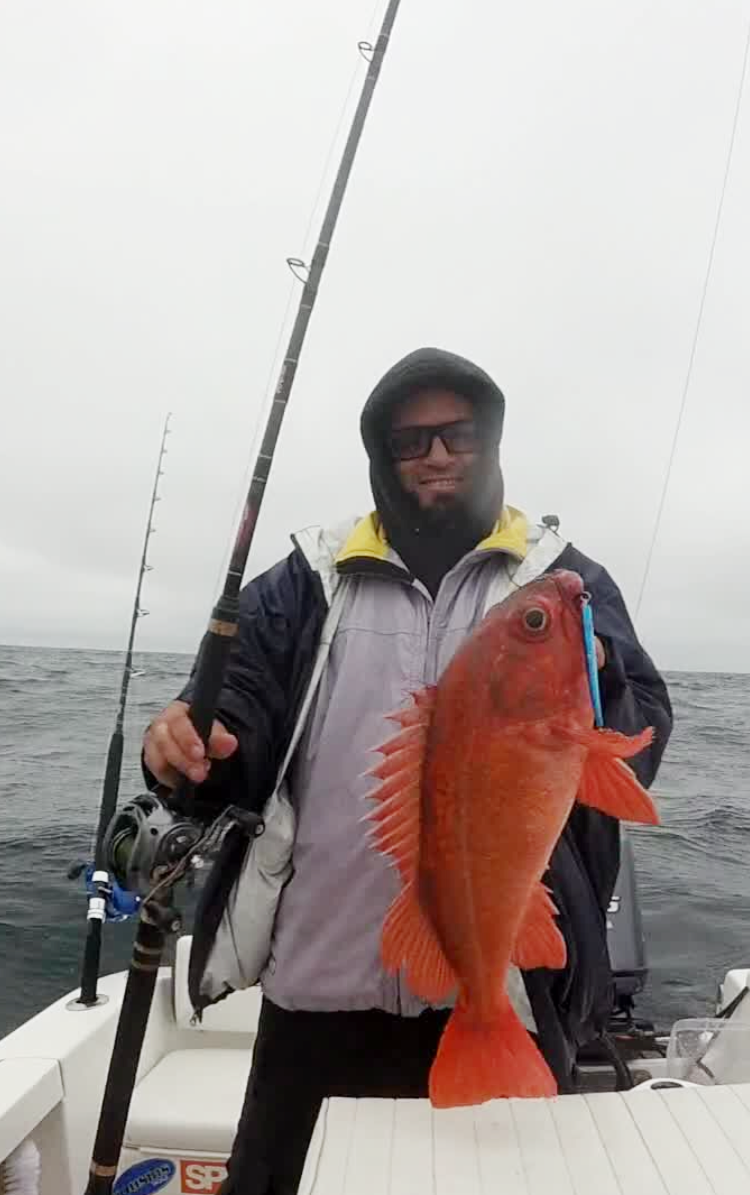 My preferred way to target the larger models is either with a heavy jig or a heavy bucktail. Depth and current will dictate how heavy of a lure you will use. When fishing at a depth of 200 feet-300 feet, a 2 ounce or 3 ounce lure just won’t cut it. In this situation, you need to go to a 10 ounce to 14 oz jig. There are numerous options out there for this but my preference is from SPRO which makes a great bait called the Prime Bucktail Jig. It comes in a variety of sizes and colors, up to 8oz. They also make a Squid Tail Jig, that is a deadly bait for shallow water bottom fishing, also offered in a handful of colors, up to 3oz. Both the Bucktail and the Squid Tail come in glow in the dark colors, which can be killer and set your apart from the next. Additionally, P-Line makes a great Chrome Jig, as seen in the photo below. It’s perfect for getting to the bottom as fast as possible, even in deep and rough seas. These range from 8oz to 16oz.
 Another method, one that will typically out-fish the former in terms of quantity and numbers, is a dropper loop with two hooks. In Northern California, they will typically fish two shrimp flies, and tip them with strips of squid, whereas down south, we often fish bare hooks with strips of squid. Both methods will work in either location.
 Travel with young children has its set of challenges. Travelling five plus hours to another country ups the ante. The Uber car came mighty early and I had already dropped the dog off at the boarding kennel by 7:00 a.m. (my parents’ rescue cat has chosen our beagle as his mortal enemy!) Taking Uber was essential because we flew out of Orange County airport and returned to LAX. Almost to the airport and I realize, oh crap, I forgot my two-piece spinning rods at the house that fit perfectly bundled up at the back of an overhead compartment. Yes, I got my Phenix blanks and had the rods built with this exact application in mind. The reels and mixed tackle bag of Krocodiles, poppers and swim baits made it. Oh well.
 As inclined as I am to being a hard charger, after a nice dinner and a good night’s sleep, I though day one was best spent with the kids doing beach and pool time. After sleeping in a little, we get our stuff together and head to the beach. What is all of this %$#@ in the water? The white sand beaches of the Yucatan were covered in vegetative rot and the aquamarine water was brown and it smelled. Ok…pool day and a swim-up bar. Looks like I did not need the surf casters anyway!
 After the seaweed day we got in out transport and headed south toward the Mayan ruins at Tulum. It was Easter, hot and extremely crowded when we arrived at the parking lot of what is a major tourist destination for Mexicans and gringos alike. I was getting major multi-generational blowback but I trudged them onward, praying that there would be a way to financially encourage our way into a more timely experience. I hired a guide and gave him a buen propina y todo se cambia. Tulum is awesome and I do not say that lightly. Major Mayan temple complexes, pyramids and other significant structures are spread along a ridge that stands prominently above the Caribbean shore. Our guide did a great job and spoke English quite well but he left after the tour was over. Tulum is magnificent but I was a little freaked out by the volume of people…asi es La Semana Santa. Thank God I rented a vehicle and did not come in a bus with all of the other people, but now I have to find it. The pathway along the ridge that edged the Caribbean had multiple ingresses and egresses. I somehow put us on a southerly route but we had the fortunate happenstance of running into a popsicle vendor with a variety of tropical flavors. As mentioned earlier, it was hot and the coconut, mango and pineapple treats were enjoyed by all of us though they were melting quickly as we walked along a coastal scrub jungle roadway. As a taxi passed by, I quickly enlisted his services realizing that a forced march would lead to stiff resistance.
 Back to the car, now heading south toward the town of Tulum and the Sian Kaan Biosphere Reserve. This place is at its zenith. While we were there Rene Redzipi of Noma fame in Copenhagen is doing a pop up restaurant here to the tune of $600 per person. I would have loved nothing more than to experience what his forage centric menu would do with the existing Yucatan approach to food and the local flora and fauna but…three kids! We slipped along the tragically hip strand that along the beach. Cool looking restaurants, art galleries and boutique hotels. They don’t really have running water, sewer systems or reliable power other than generators but it is really cool. We stop for killer burgers at a place called Mateo’s. The kids play a little foosball and we have a cold beverage before heading south toward the Sian Kaan Biosphere Reserve and realize that this place definitely deserves a return visit.
 Your reel is screaming as your line is peeling off it at a rapid pace. The fish takes a turn to the left and you must follow it. At that point, the real challenge occurs. There are nine other anglers to your left with their lines straight out. What do you do?? Well first off welcome to catching yellowtail on a party boat. Second, you head that way going over or under the other angler’s lines and rods as you chase your fish. This action has many names like the Chinese fire drill, Texas Two Step Shuffle or it sometimes is called something that I can’t print on these pages.
 Southern California yellowtail fishing usually begins sometime in March-though this year in San Diego it was earlier and continues to November. Our local landings sportfishing trips can all catch yellowtail from ½ day trips to overnight and longer trips. Typically, the longer trips have more consistent catches and in greater numbers, but this is not always the case.
 Local yellowtail fishing can be at one of our local islands which is either San Clemente Island or Catalina Island and occasionally Santa Barbara Island. Or it may be paddy hopping. It just depends on where the fish are. Either overnight or ¾ day trips are the best trip lengths to catch spring yellowtail. During warmer water years yellowtail will bite fin baits such as sardines, anchovies, and even mackerel. During normal to colder water spring periods live squid may be needed to get the yellowtail in the biting mood. Yo yoing an iron jig can also be effective as well as sight casting to breezing schools of yellowtail on the surface.
 Once you have cast your fin bait try to let it swim as natural as possible this means letting it take line out and not pulling on it or creating resistance against the bait. If your bait is staying put and not moving much you can give it a twitch to wake it up. If that doesn’t liven your bait, then it is time to change your bait. Change your bait at least every other cast. This is very important as strong bait will get the most bites of yellowtail and almost all other game fish. The only time this doesn’t apply if you have limited bait or a limited type of bait in which case try to make the most of each bait. The deckhands will let you know if that is the situation.
 When fishing live squid techniques change quite a bit. First you can use a live squid for many casts as a yellowtail will be just as likely to hit an almost dead squid as a lively one. In fact there are times when fresh dead squid is preferred to live squid. There are not too many different ways to hook a squid as you want to hook it in the upper cone area away from the head. Ideally hooking it and then bring the hook back again so it is securely attached. Lots of smaller fish will pick at your bait and if it is not securely attached it will be taken off the hook very quickly by the smaller fish. A large hook such as 2/0 -4/0 (Owner and Mustad are good brands) is ideal as yellowtail will not be hook shy like they can be with fin bait. When fishing with live squid be prepared to fish both deep and shallow or close to the surface. Sometimes the bite is right on the bottom and other times it will be in the middle of the water column or on the surface. Keeping an eye on where anglers are getting bit is the key to using the right weight for the given situation. Your live squid should not run too much even if fishing without any weight so if it starts really moving it is a fish.
 Fishing iron jigs that run deep, medium weighted, and even surface iron can be very effective. One must be very careful though when doing this type of fishing. It just takes one second of not being aware to hook someone in the head. Some boats actually discourage people throwing jigs when the boat is crowded. Safety first. After making sure the coast is clear, cast your jig a good distance from the boat and then letting it sink for varying times allows you to cover different depths and with different angles of retrieves creating different presentations. The key when fishing a jig is to keep it moving. Usually the faster the better. Surface iron maybe the exception as there is times when a slower presentation works. When using an iron jig you can fish along the side and even in the front of the boat and cover a lot more area than by bait fishing. Most of your bites will come while reeling it back and you need just keep reeling as you get bit. The reeling tension and the fish should set the hook. Make sure your hooks are super sharp before you start fishing. When yellowtail are breezing on the surface a surface iron can be really effective and you can cast into the school before they are disturbed by the boat.
 The author’s son Bricen shows off a nice El Capitan bass that fell for a drop shot rigged Yamamoto Kut-tail worm
 Additionally, like many other types of pan fish, crappie will also eat insects, insect larvae, plankton, and worms. This is typically the case in lakes and ponds where large baitfish populations are normally uncommon. While they follow the bait, where bait is present, many times the larger models will prefer to hang out around structure such as stick ups, brush piles, lay-downs, and ledges, positioning themselves for a quick and safe ambush attack. Depending on the time of the year and the water temperature, you can find them schooled up at different depths. When they are spawning, or moving into the shallows to spawn, they can be found in water as shallow as 1-3 feet deep. When the water is colder, typically under 45 degrees, they will hang out in water as deep as 30-50 feet deep. However, as the water gets too warm, upward of 70-75 degrees, they typically go back towards the deeper water, and will become somewhat sluggish post-spawn, to conserve their metabolic energy.
 Anglers that are just getting started in targeting this fish, quickly realize that one of the largest problems is hooking crappie, followed by keeping them on the hook. They have been dubbed the infamous “paper-mouth” for a reason. They have an extremely soft and paper-thin mouth, and setting the hook too hard will often tear the membrane, followed by a quick exit of your hook from its mouth. Because you will typically be fishing an extremely light and finesse set up, you must be gentle in not only hooking the fish, but also fighting the fish, while still maintaining constant pressure. If you allow for any slack in your line during the fight, you are giving the crappie a high percentage chance of shaking the hook free and swimming off. This is why having the proper set up is extremely important in having the best chances of hooking and landing this delicious fish.
 My go to bait for targeting crappie, and one of my favorite all around lures, often underestimated because of its size, are the SPRO Phat Flies, designed by Bill Siemantel. They are made in 1/16oz & 1/8oz, and come in 5 different colors, ranging from “baby bass” and “bluegill”, to several different variations of shad, as well as a bright chartreuse. They use a Gamakatsu hook and its world-class sharpness plays a large role in hooking and landing the fish. These baits are great for being able to “match the hatch” to some of the most prevalent bait fish in our California waters. The primary technique for which Bill designed these jigs, is the Float and Fly method. Because of their design and balance, they sit under the bobber horizontally, enhancing the level of presentation, but also increasing the hookup ratio. They can also be thrown like a “mini-jig”, which is typically what I do for panfish and trout. Having said that, the Float and Fly method can be quite effective for these fish as well, in addition to the trophy bass that it was designed for. With the mini jig method, it’s a short and constant twitch of the rod tip, and your tackle plays a huge factor in being able to execute it properly.
 American Angler jackpot winners, names as noted. L-R- Dr.Chong Chang 50.2lbs wahoo, Eric McKenna 49.0lb. wahoo, Steve Osborne – 48lb. yellowtail , Tom Kvitli 48.6lb. wahoo Spring Valley, CA,
  Walt Bailey with a beautiful wahoo.
  Don Amboyer journeyed all the way from Michigan to catch the American Angler 8-day trip’s largest tuna, this 40.4 pounder
 School-size tuna like these were biting ferociously at the Ridge for the American Angler’s passengers.
 I got back from a 1.5 day aboard the O95 on the Wednesday before Thanksgiving and the trip was nothing short of epic. My two friends, Coleman and Andy, joined me for this trip. Let me start out with saying that Capt. Rick and the crew of the O95 are top notch and will do their absolute best to put you on fish and stay till late to get bit.


